The Ranch | Wholesale Plants & Nursery
Milkweed Plant
Milkweed Plant
Couldn't load pickup availability
Asclepias species (Milkweed)
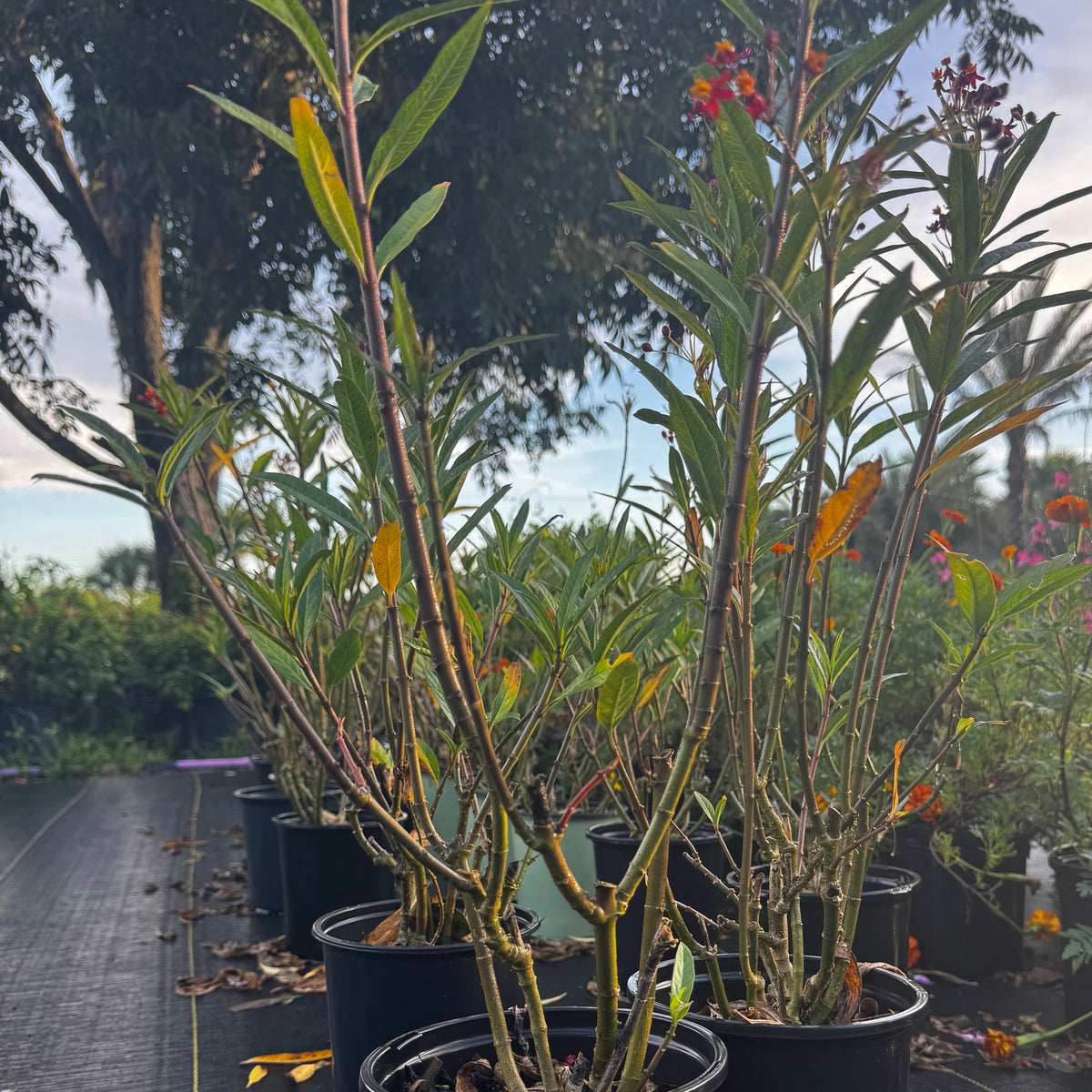
Commonly known as Milkweed, are flowering perennials valued for their colorful blooms and essential role as host plants for monarch butterfly caterpillars. Commonly used in pollinator gardens, native landscapes, borders, and naturalized plantings, milkweed provides nectar for butterflies, bees, and other beneficial pollinators while supporting the monarch butterfly life cycle.
Water Requirements: Low to moderate. Drought tolerant once established; water regularly during the first growing season, then as needed. Requirements vary somewhat by species.
Soil: Well-draining soil. Many species perform well in sandy or loamy soils and tolerate relatively poor soil conditions.
Growth Rate: Moderate to fast.
Bloom Time: Spring through fall; produces clusters of nectar-rich flowers that attract butterflies and other pollinators.
Temperature: Varies by species. Many commonly grown milkweeds are hardy in USDA Zones 8–11 in Florida, while native species may tolerate colder conditions.
Pruning: Minimal. Remove damaged or declining growth as needed. Plants can be cut back periodically to encourage fresh foliage and maintain a tidy appearance.
Toxicity: Toxic if ingested. The milky sap contains cardiac glycosides that can be harmful to people and pets and may cause skin or eye irritation.
Mature Height
Mature Height
2–5 ft
Mature Width
Mature Width
1–3 ft
Sunlight
Sunlight
Varies by species; commonly orange, yellow, red, pink, or white.
Flower Color
Flower Color
Varies by species; commonly orange, yellow, red, pink, or white.
Foliage Color
Foliage Color
Medium to bright green.
Share